


Wayfinding Signage
Wayfinding Signage That Looks Unified and Works in the Real World
Wayfinding signage is the silent tour guide of a property. When it’s done well, people move confidently from entrance to destination with fewer wrong turns, fewer “where am I” moments, and fewer phone calls to staff. When wayfinding signage are done poorly, the property feels confusing even if everything else is beautiful. The goal is not “more signs.” The goal is a system that uses consistent naming, consistent placement, readable typography, and durable materials so the signs keep doing their job year after year.
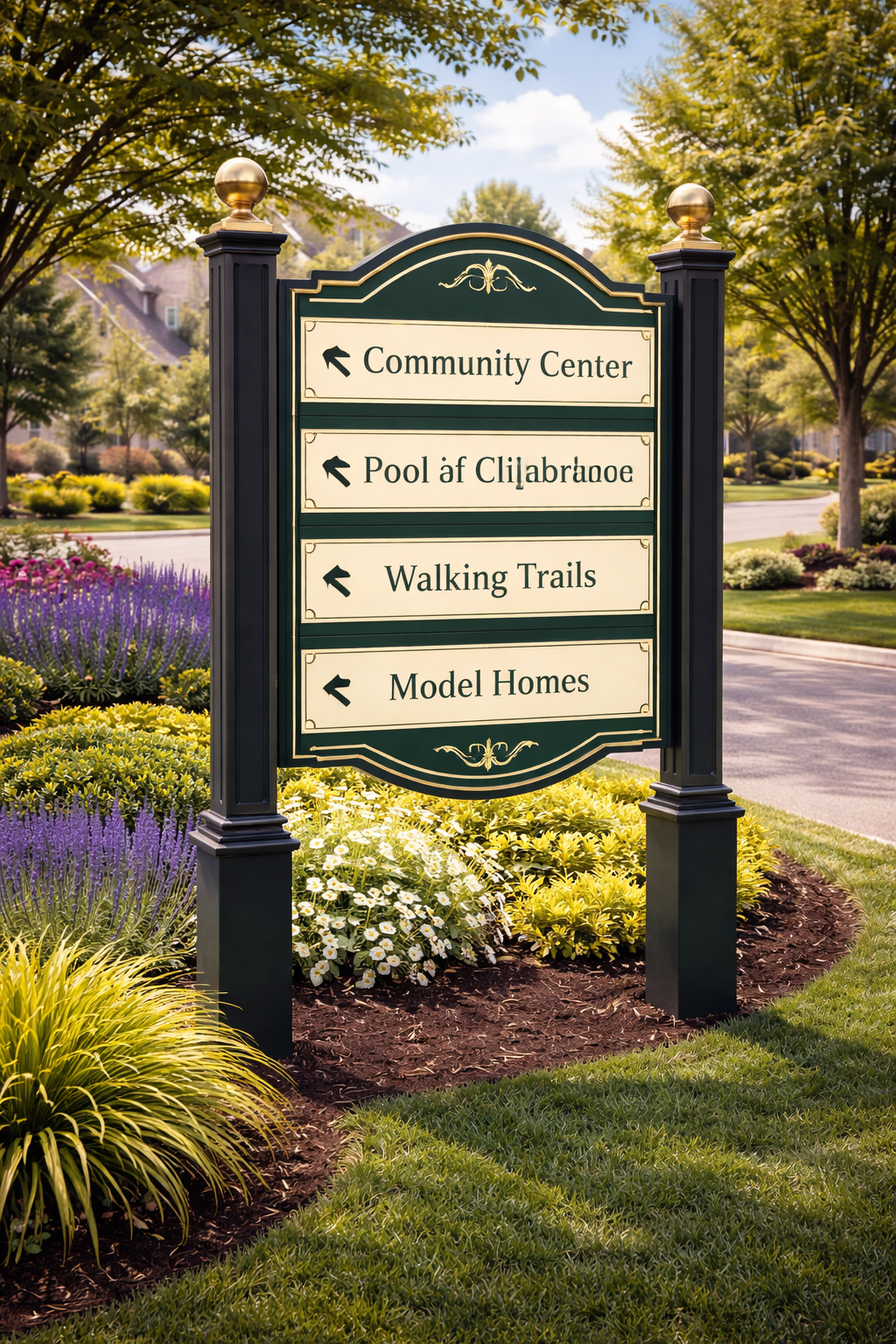
What wayfinding signage includes
Wayfinding signage can be simple or comprehensive depending on the size and complexity of the site. Common elements include:
-
Entry and arrival markers
-
Building and unit identification signs
-
Directional arrows and decision point signs
-
Parking and garage identification
-
Amenity directions for pools, clubhouses, gyms, trails, and mail stations
-
Campus style maps and directory kiosks
-
Pedestrian wayfinding signs for sidewalks and shared pathways
A strong wayfinding plan anticipates where people hesitate. Those hesitation points are where signage earns its keep.
The difference between wayfinding and rules signage
Wayfinding signage answers “Where is it and how do I get there?”
Rules signage answers “What is allowed here?”
Most properties need both, but they should not fight each other visually. A unified design standard keeps everything from looking like a yard sale of fonts and colors.
Readability is a design requirement, not a preference
Signs are read at speed, in motion, in glare, in rain, and sometimes at night. That means readability should drive the layout:
-
High contrast copy that holds up in sun and shade
-
Letter sizing that matches viewing distance
-
Clean hierarchy so the most important words win immediately
-
Consistent naming so “Clubhouse” does not become “Community Center” on the next sign
If your property has grown over time, inconsistent labels are one of the biggest sources of confusion, and they are usually easy to fix.
Materials that survive outdoors
Outdoor wayfinding signage lives in weather, sprinklers, humidity, snow, and daily abrasion. A sign that looks great at install but fades quickly is not a bargain.
Common durable options include aluminum and other outdoor rated substrates, paired with finishes chosen for UV resistance and long term legibility. The right material depends on your environment, mounting method, and how exposed the sign location is.
Placement matters more than people expect
Even the best sign fails if it is placed after the decision point instead of before it. A practical wayfinding plan considers:
-
Where people first enter the site
-
Where they make their first major decision
-
Where they split between vehicle and pedestrian paths
-
Where parking transitions into walking
-
Where guests get confused most often
If you can share a simple site plan or a few photos from the trouble spots, it becomes much easier to recommend the right sign types and placements.
What to send for the fastest quote
You do not need perfect specs to start. The fastest way to get accurate pricing is to send:
-
Property type and location
-
The sign categories you need and approximate quantities
-
Photos of existing signs or install areas
-
Any naming conventions you want to standardize
-
Any style examples or brand guidelines
If you are unsure, send context and photos. We can recommend a sensible sign package.
Our process
-
You send details through the form
-
We confirm sign types, quantities, placement needs, and naming
-
We recommend materials, finishes, and a unified system approach
-
We finalize pricing and lead time, then coordinate next steps
Q: Can you match our existing wayfinding signage style
A: Yes. Share photos or any existing standards and we can match the style while improving readability and consistency where it helps.
Q: Do you help plan a full wayfinding signage system
A: Yes. We can coordinate a property wide plan including building markers, directional signs, parking identifiers, amenity signs, and directories so everything works together.
Q: What if we do not know how many signs we need
A: That is common. Share a site map if you have one and a few photos of confusing areas. We will recommend sign types, placement points, and a practical quantity range.
Q: How long does wayfinding signage take
A: Lead time depends on scope, materials, and design readiness. Once we confirm the package, we provide timing and next steps.
Glossary definitions
Wayfinding signage: Signs designed to guide people through a property using directions, identifiers, and location cues so visitors can navigate without asking for help.
Directional sign: A sign that points people toward destinations using arrows, distances, or clear next step instructions.
Decision point: A location where a person must choose a route, such as an intersection, split driveway, lobby fork, or parking exit.
Sign system: A coordinated set of signs that share consistent naming, design rules, and placement logic across a property.
Ready for the next step
If you are planning new wayfinding signage or replacing an inconsistent patchwork, submit the form and we will follow up with recommended options, any clarifying questions, and next steps for pricing and timing.
GET IN TOUCH
Have questions or need pricing? We specialize in helping entire communities achieve a beautiful and unified aesthetic theme throughout.
Contact Us